

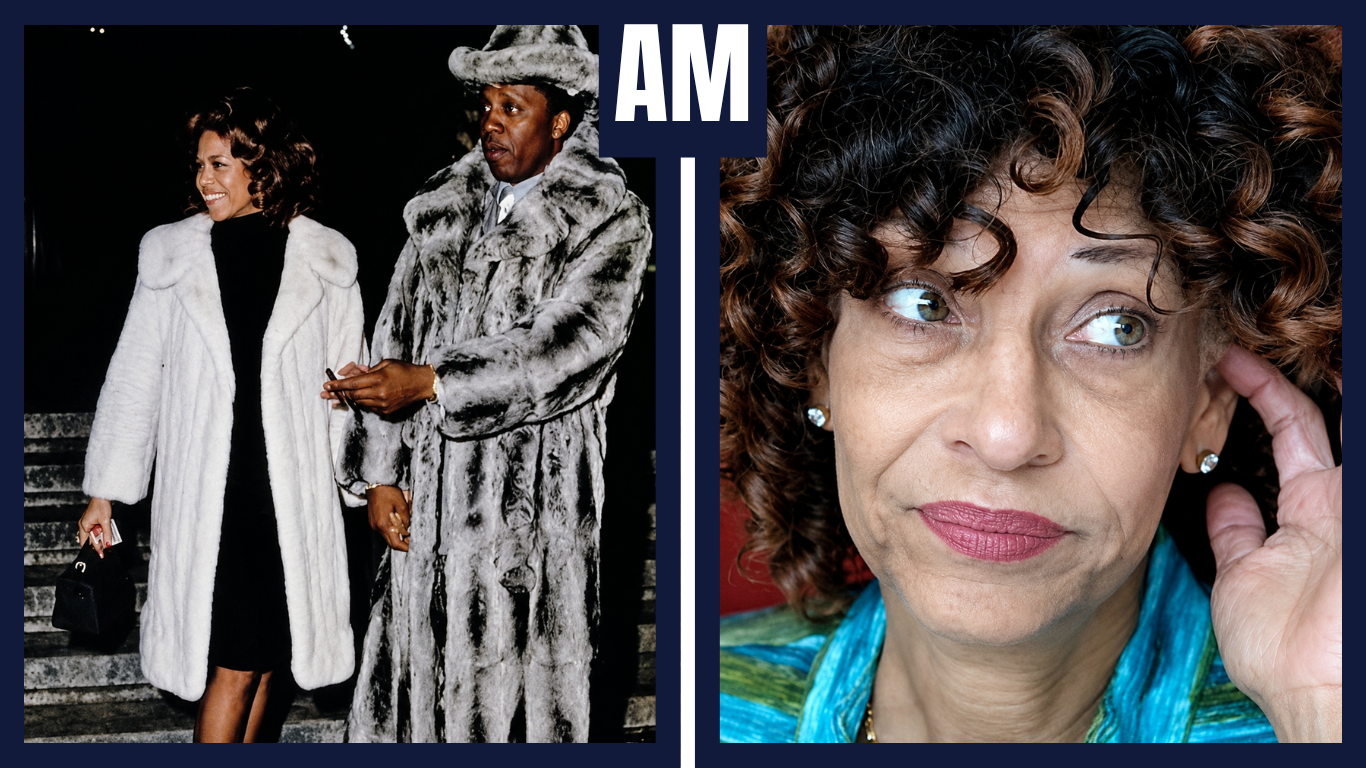
When people talk about the rise and fall of Harlem’s most infamous drug kingpin, the name Julianna Farrait almost always comes up as the woman who stood directly by his side through every peak and valley. Married to Frank Lucas during the height of his multi-million-dollar heroin enterprise in the late 1960s and 1970s, she was far more than just a quiet observer sitting in the background. Her life was defined by extreme luxury, fierce loyalty, high-stakes danger, and eventually, the heavy consequences of federal law enforcement investigations.
Understanding the true story of Julianna Farrait requires looking past Hollywood scripts and examining the complex reality of her journey. She transitioned from a young woman growing up in Puerto Rico to becoming Harlem drug royalty, navigating witness protection, and ultimately facing federal drug charges of her own late in life. Her journey offers a fascinating, cautionary look into the true costs of living fast inside America’s underground crime world.
Early Life and Background in Puerto Rico
Long before her name grabbed headlines across New York City, Julianna Farrait spent her youth in Puerto Rico during the 1940s. Raised in modest circumstances, she lived a quiet early life far removed from the criminal underground she would later inhabit. Friends and acquaintances from her youth recalled a striking young woman who possessed natural charm and charisma—qualities that made her stand out in her local community.
Over the years, popular culture built a widespread rumor that Julianna Farrait won the Miss Puerto Rico pageant. However, historical records clarify that while she won a local homecoming queen title during her youth, she never held the national Miss Puerto Rico title. Media outlets and film adaptations blurred this distinction to add romantic flair to her story, but her true origins remained much more grounded.
Before making her way to New York, her world centered entirely around her family and island life. She maintained no early connection to organized crime or illicit narcotics. However, once she began traveling between Puerto Rico and the United States mainland, her life trajectory dramatically shifted, placing her directly on a path toward one of the most lucrative illegal organizations in American history.
How Julianna Farrait Met Frank Lucas
A fateful meeting between Julianna Farrait and Frank Lucas took place in the late 1960s during a commercial flight traveling between Puerto Rico and New York City. Lucas, who was actively building his formidable “Country Boy” heroin syndicate in Harlem, fell instantly for her poise and beauty. The two struck up a conversation during the flight, initiating a rapid romance that quickly evolved into a lifelong bond built on mutual devotion.
In 1967, the couple officially tied the knot, bringing Julianna Farrait directly into the inner circle of Lucas’s rapidly expanding empire. Lucas made millions by bypassing traditional Mafia supply lines and smuggling high-purity heroin directly from Southeast Asia. As his wealth skyrocketed, he showered his new bride with lavish gifts, luxury travel, and unfettered access to a lifestyle that few people of that era could ever imagine.
A shared appetite for success, elegance, and high-stakes living anchored their marriage. While Lucas managed the daily street operations and international logistics of his syndicate, his new wife embraced her role as the premier lady of his social sphere. The couple’s partnership became legendary throughout Harlem, signaling to everyone that they held the absolute peak of street wealth and social prestige.
Inside the Fast Life: Luxury, Diamonds, and Harlem Royalty
During the early 1970s, Julianna Farrait fully immersed herself in the extravagant lifestyle that her husband’s narcotics network funded. The couple split their time between a lavish home in Teaneck, New Jersey, and the vibrant streets of Harlem, where people treated them like royalty. She developed a pronounced taste for high-end fashion, collector jewelry, expensive furs, and custom foreign automobiles, including a cream-colored Mercedes-Benz that Lucas bought for her.
Friends and associates noted that the energy and danger surrounding their lavish lifestyle genuinely thrilled Julianna Farrait. In later interviews, she openly admitted that money, expensive possessions, and the adrenaline of living on the edge deeply attracted her. Rather than hiding their wealth, the couple displayed it proudly, frequenting top nightclubs, high-profile sporting events, and elite dining establishments across New York City without hesitation.
Despite the underground nature of Lucas’s business, the couple maintained a relatively peaceful domestic environment at their New Jersey estate for their growing family. However, balancing quiet suburban living with the chaotic realities of Harlem’s drug trade created constant instability. The sheer volume of cash flowing through their lives made it impossible to remain invisible forever, ultimately drawing intense law enforcement scrutiny.
The $50,000 Chinchilla Coat That Changed Everything
If one single event permanently cemented Julianna Farrait in true crime history, it was her decision to buy her husband an extraordinarily extravagant gift. In 1971, for the legendary Muhammad Ali versus Joe Frazier boxing match at Madison Square Garden, she purchased a floor-length $50,000 chinchilla coat along with a matching $10,000 hat for Lucas from a luxury Manhattan furrier.
When Lucas walked into the arena wearing the striking chinchilla ensemble, he immediately drew the eyes of everyone in attendance—including undercover narcotics agents and federal prosecutors. While major crime bosses typically tried to blend in quietly, Lucas sat in high-priced seats looking more prosperous than top corporate executives. Federal authorities instantly took notice and prioritized identifying who he was and where he obtained his money.
Law enforcement officials later stated that the infamous chinchilla coat served as the exact catalyst that put Lucas and Julianna Farrait at the top of federal wiretap requests and surveillance operations. What she intended as a grand gesture of love and status ultimately backfired, sparking the investigation that dismantled their entire narcotics organization.
The 1975 DEA Raid and First Conviction
The high life came to a sudden halt in January 1975 when a joint task force of federal DEA agents and local police officers executed a surprise raid on the couple’s Teaneck, New Jersey home. During the chaotic search, law enforcement officers recovered over $500,000 in hidden cash along with extensive documentation linking the household to organized drug trafficking across state lines.
Authorities took both Lucas and Julianna Farrait into federal custody, charging them with severe conspiracy and narcotics offenses. While prosecutors pursued a staggering 70-year prison sentence against Lucas as the ringleader, they also convicted his wife for her active involvement in managing and benefiting from the enterprise. The court ultimately sentenced her to five years in federal prison.
The conviction served as a harsh reality check for Julianna Farrait, instantly stripping away the luxury cars, fine jewelry, and social status she had enjoyed for nearly a decade. Separated from her young children and facing life behind bars, she quickly adapted to the unforgiving environment of the federal prison system while her husband began navigating his own legal battles.
Life After Release and the Witness Protection Program
Following her release from prison after serving her five-year sentence, Julianna Farrait stepped into a completely different world. Her husband made the momentous decision to cooperate fully with federal prosecutors, providing vital evidence that led to dozens of convictions against major drug traffickers and corrupt police officers. In exchange, the court dramatically reduced his sentence, and federal marshals placed the family into the Witness Protection Program.
Living under assumed identities in secret locations required an immense adjustment for someone accustomed to the bright lights and status of Harlem. The family left behind their remaining assets and constantly looked over their shoulders due to threats of retaliation from former criminal associates. The psychological pressure of maintaining fake lives put a severe strain on their marriage.
During the 1980s, the couple temporarily separated as they struggled to adapt to a quiet, law-abiding existence without easy money. Julianna Farrait spent time living independently, occasionally relocating to different cities, including Las Vegas. Despite the distance and personal friction, the pair never formally divorced, maintaining a complex emotional bond that kept them connected across the decades.
Julianna Farrait’s 2010 Drug Bust at Age 70
Decades after the fall of Harlem’s heroin empire, Julianna Farrait shocked the public by returning to federal crime headlines. In May 2010, at the age of 70, DEA agents arrested her in an undercover operation at a hotel room in Isla Verde, Puerto Rico. Federal agents caught her red-handed attempting to arrange the sale of two kilograms of cocaine to a confidential informant.
Wiretapped conversations revealed that she actively negotiated drug deals, demonstrating an impressive familiarity with wholesale narcotics pricing and distribution logistics. Law enforcement officials expressed surprise that a senior citizen with a prior federal conviction would risk her remaining freedom to re-enter the volatile drug trade so late in life.
Investigative reports suggested that financial hardship and a lingering attraction to quick money drove Julianna Farrait back into illicit activities. Having spent her youth enjoying limitless wealth, living on a modest income in her golden years proved difficult. Her arrest made it clear that she had never fully shed the habits and lures of her past life.
The 2012 Sentencing and Plea for Mercy
In 2012, Julianna Farrait appeared before a federal judge in Manhattan for sentencing following her cocaine conviction in Puerto Rico. Looking frail and visibly aged compared to her vibrant youth in Harlem, she addressed the court directly, expressing deep remorse for her actions and asking the judge for leniency so she could care for her failing, elderly husband.
During her emotional court statement, she stated: “I am ashamed that at my age I am standing in front of you… My husband is 81 years old, and I would like to spend what time he has with him.” Her legal defense team argued that her advanced age and health issues justified a reduced sentence, pointing out that spending years behind bars could prove fatal.
Despite her heartfelt plea, the federal judge emphasized that age could not excuse participating in wholesale drug trafficking operations. The court sentenced Julianna Farrait to five years in federal prison, ensuring she would spend her early seventies behind bars away from her family and her aging husband once again.
Julianna Farrait vs. ‘Eva’ in American Gangster
When director Ridley Scott released the hit biographical crime film American Gangster in 2007, global audiences discovered a fictionalized version of Julianna Farrait. In the movie, screenwriter Steven Zaillian named her character “Eva” and cast Puerto Rican actress Lymari Nadal alongside Denzel Washington, who played Frank Lucas to critical acclaim.
While the film captured the glamour and high energy of the era, it took significant liberties with the real life of Julianna Farrait. In the movie, Eva appears as an innocent Miss Puerto Rico winner who remains largely clueless regarding the violent realities of her husband’s business. In reality, official court records and law enforcement reports show that she acted as an active, willing partner who fully understood and embraced the origin of their wealth.
| Feature / Topic | Hollywood Film (American Gangster) | Real Life Reality (Julianna Farrait) |
| Name | Eva | Julianna Farrait (Julie) |
| Pageant Title | Miss Puerto Rico | Local High School Homecoming Queen |
| Knowledge of Crime | Innocent bystander | Fully aware and active participant |
| Later Years | Leaves Lucas after raid | Remained connected; arrested for drug deals in 2010 |
The movie also altered the timeline of their relationship, showing Eva leaving Lucas immediately after the 1975 federal raid. In real life, Julianna Farrait stood by Lucas through his prison terms, witness protection, and various post-empire challenges, proving that their real-world dynamic was far more complex than a standard Hollywood script could capture.
Her Children and Family Legacy
Raising children amidst the chaos of federal raids, prison sentences, and secret witness protection moves presented an overwhelming challenge for Julianna Farrait. The couple had several children together, most notably their daughter Francine Lucas-Sinclair, who grew up experiencing the traumatic ups and downs of having two parents targeted by federal law enforcement.
Rather than following in her parents’ footsteps, Francine turned her childhood struggles into a positive public mission. She founded Yellow Brick Road, an organization that provides emotional support, educational resources, and guidance to children whose parents are currently serving prison sentences. Her work has helped thousands of youth navigate the shame and confusion that often accompanies parental imprisonment.
The success of her children stands as a meaningful counter-narrative to the criminal history of Julianna Farrait and Frank Lucas. While their parents became famous for street wealth and federal prison sentences, the next generation actively worked to heal the damage caused by the narcotics trade and build honest, law-abiding legacies.
Julianna Farrait’s Later Years and Death
After completing her second federal prison term in the mid-2010s, Julianna Farrait withdrew completely from the public eye. She spent her final years living quietly, avoiding media interviews and keeping her distance from public events related to true crime history or American Gangster.
Her primary focus during her remaining time centered on her family and health. Having experienced the extremes of absolute luxury and federal incarceration, she chose to live out her final chapter far away from reporters and law enforcement attention.
Julianna Farrait passed away quietly prior to the death of Frank Lucas, who died of natural causes in May 2019 at the age of 88. Her passing marked the final quiet chapter of a woman who had once stood at the absolute center of one of the most talked-about criminal eras in American history.
Conclusion
The life story of Julianna Farrait remains one of the most compelling narratives in the annals of modern American true crime. From her modest upbringing in Puerto Rico to ruling Harlem’s social scene alongside Frank Lucas, her trajectory featured extreme highs and devastating lows. Her infamous decision to buy the chinchilla coat serves as a timeless reminder of how quick displays of wealth can invite sudden ruin.
Ultimately, her journey serves as a powerful cautionary tale about the true cost of fast money and criminal ambition. While pop culture often romanticizes the glamour, fine clothes, and status of crime syndicates, the real life of Julianna Farrait demonstrates that federal convictions, broken families, and lost freedom almost always mark the end result.
Today, researchers, movie fans, and true crime historians continue to study her life to understand the human reality behind the Hollywood myths. Julianna Farrait was neither a simple movie archetype nor a helpless bystander; she lived life on her own terms and paid the full price for every choice she made.
FAQs
Who was Julianna Farrait?
Julianna Farrait was the wife of Harlem drug kingpin Frank Lucas. She became famous in the 1970s for her lavish lifestyle, her active involvement in Lucas’s social circle, and her conviction in federal court for drug-related offenses.
Did Julianna Farrait really win the Miss Puerto Rico pageant?
No, Julianna Farrait never won Miss Puerto Rico. While popular media and the 2007 movie American Gangster portrayed her as a national beauty queen, she actually won a local homecoming queen title in her hometown in Puerto Rico.
What sparked the controversy surrounding the famous chinchilla coat?
In 1971, Julianna Farrait bought Frank Lucas a $50,000 floor-length chinchilla coat and a $10,000 matching hat for the Muhammad Ali vs. Joe Frazier fight. The extravagant outfit drew the immediate attention of undercover DEA agents, sparking the federal investigation that eventually brought down their empire.
Why did federal agents arrest Julianna Farrait in 2010?
At age 70, DEA agents arrested Julianna Farrait in Puerto Rico after she attempted to sell two kilograms of cocaine to an undercover informant. In 2012, a Manhattan federal judge sentenced her to five years in federal prison.
Does the character ‘Eva’ in American Gangster accurately reflect Julianna Farrait’s life?
Not entirely. While the character Eva (played by Lymari Nadal) captures her glamour and Puerto Rican heritage, the movie portrays her as an innocent bystander. In reality, Julianna Farrait fully understood Lucas’s operations and served time in federal prison for her own involvement in the illegal narcotics trade.
