

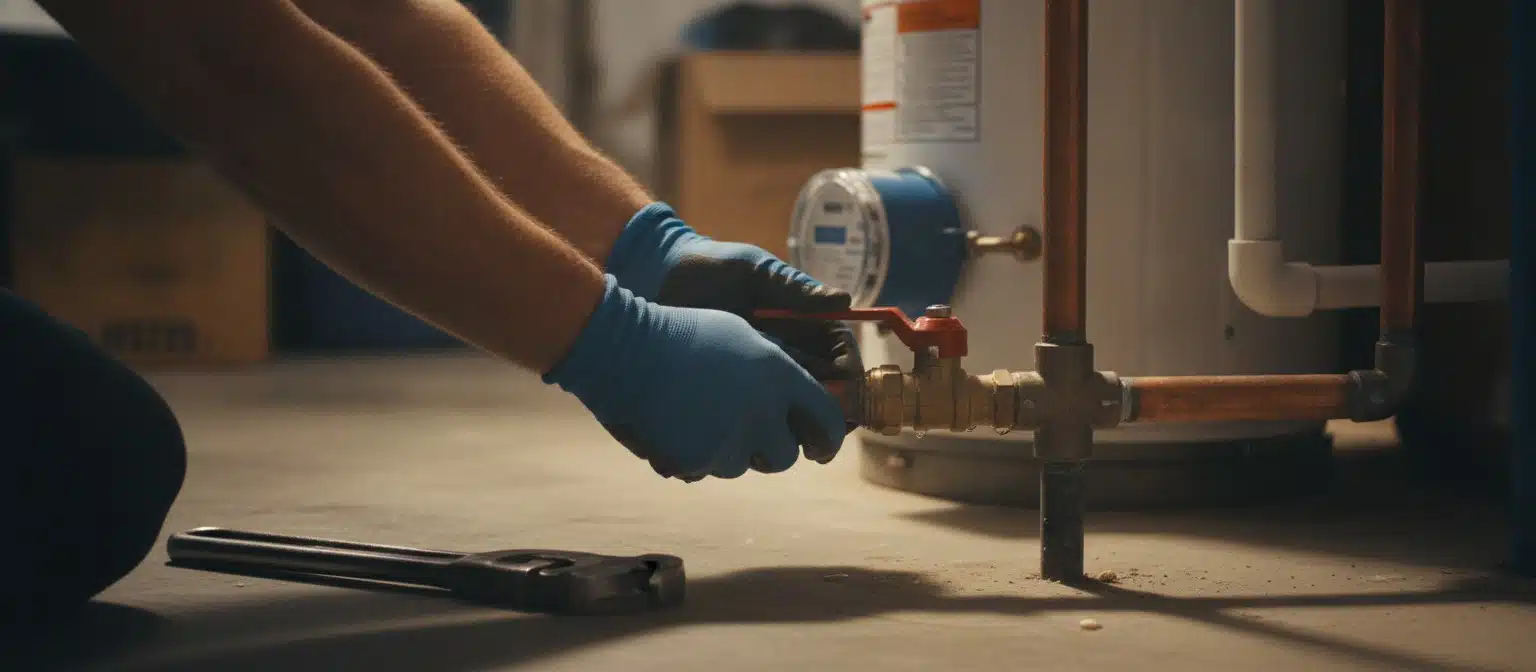
Water on the floor, a toilet that will not stop rising, or the metallic hiss of a burst line can turn calm into chaos in seconds. What you do in the first 15 minutes often determines how much damage your home takes and how straightforward the repair will be. This article walks you through practical, safe steps any homeowner can take before a professional arrives. You will learn how to recognize a true emergency, find and use shutoff valves, make the area electrically and mechanically safe, contain damage without making things worse, and prepare the right information so repairs start faster.
When a plumbing issue is truly an emergency
Some problems cannot wait. Active, uncontrolled leaks on pressurized supply lines, a hot-water tank leaking from the shell, a basement floor drain that’s pushing up sewage, or any water near electrical outlets are immediate emergencies. So are frozen pipes that bulge or weep after a freeze-thaw cycle, a sulfur or gas smell around a water heater, and a toilet bowl that keeps rising after a flush. In contrast, a slow drip from a P-trap or a running toilet generally qualifies as urgent but not catastrophic if you can isolate the fixture.
Two quick examples help frame it. At midnight, a braided stainless-steel hose under a vanity bursts and sprays the room. That’s an emergency: shut down the supply and protect the structure. During a heavy storm, a basement utility sink drains sluggishly, and a floor cleanout cap begins to weep. That can become an emergency if the main is surcharged; stop using all fixtures, keep people out of the area, and prepare to relieve pressure at a cleanout only whenit’ss safe to do so.
Shut down water fast and correctly.
Find the whole-house shutoff first. It is often on the wall where the service line enters the home, near the water meter, in a crawlspace, or in a utility closet. A ball valve turns a quarter turn, so the handle is perpendicular to the pipe. An older gate valve turns clockwise repeatedly to close. In some neighborhoods, the curb stop is at the street by the meter box and requires a meter key. If a fixture has its own stops, such as the angle stops under a sink or the toilet supply valve, closing those can buy time while you locate the main. If you cannot locate or operate the valve, call a local professional, such as a Severna Park plumber, for guidance while you work to limit damage.
After closing the main, open a faucet at the lowest level of the house to drain the lines and reduce pressure, then crack an upstairs faucet to admit air. If you turn off the cold-water supply to a tank-style water heater, switch off its breaker or set the gas control to off so it doesn’t fire with inadequate water. If your home has a pressure-reducing valve (PRV), know that stuck PRVs can cause odd symptoms like vibrating pipes or persistent flow; the main shutoff is still your best first step.
Make the scene safe: electricity, gas, and sewage.
Water and electricity are a dangerous combination. If you see water near outlets, cords, or a power strip, switch off the circuit at the breaker panel. A tripped GFCI outlet in a wet area is a clue there’s a risk. Around gas appliances, avoid open flames and do not try to relight a pilot. If the water heater is standing in water, shut off its gas valve or breaker and leave it alone until a professional inspects it. Never remove a T&P relief valve to “relieve” a hot tank; that valve is a safety device, not a drain.
Sewage backups demand extra caution. Keep children and pets away, put on gloves and boots, and avoid using any other fixtures because flushing a toilet upstairs can push more effluent into a basement floor drain. If you can safely access an interior or exterior cleanout, cracking the cap slightly may relieve pressure, but be ready for flow. Homes with a backwater valve should verify that it is closed and unobstructed. Do not use chemical drain openers on a complete blockage; the heat and caustic reaction can warp PVC, crack old cast iron, and create a hazard for anyone opening the line.
Containment that actually helps, not hurts
Work to intercept water and move it where it can do the least harm. Buckets, towels, a wet/dry vacuum, and plastic sheeting under leak points limit spread. If a ceiling forms a sagging “bubble,” place a bucket underneath and carefully poke a small hole in the lowest point to relieve water in a controlled way and reduce collapse risk. Open cabinet doors under sinks to speed drying, remove toe-kick panels if they are trapping water, and run fans and a dehumidifier to cut the time materials stay wet. Pull up rugs and move electronics, paper goods, and MDF furniture away from damp areas.
For temporary pipe control, a rubber patch secured with a hose clamp can slow a pinhole leak on copper. Self-fusing silicone tape wrapped tightly around a sweating joint or a cracked hose can buy a few hours. A compression cap can isolate a failed angle stop. These are stopgaps, not fixes, and they will not hold long on high-pressure or split lines. The trade-off is simple: if a patch lets you briefly reopen the main to flush a toilet or wash hands, do it under supervision and close the main again; don’t rely on a temporary wrap while leaving the house pressurized.
What your plumber needs to know, and the mistakes to skip
Good information accelerates repairs. Note exactly which fixtures are affected and which are not, whether the leak stops when the main is closed, and the pipe material you can see (copper, CPVC, or PEX). Share photos of the failed part, the main shutoff, the water meter, and any valves you closed. If a water heater is involved, snap a photo of the data plate. If a sump pump is involved, test the float switch and check whether a GFCI tripped. Mention prior work, such as a recent cartridge change, garbage disposal swap, or washing machine hose replacement.
Avoid common pitfalls. Do not crank an old gate valve with pliers until the stem snaps. Don’t use a torch to thaw a frozen line; start with gentle heat at the faucet end instead, or leave it to a pro. Never cap a gas line yourself. Skip pouring lye-based drain cleaner into a completely blocked line; it can pool in the pipe and injure the person who opens it later. And do not assume a slow ceiling drip is “minor” after you shut the water; trapped moisture behind baseboards and drywall can feed mold if not dried promptly.
Handled calmly and methodically, the first 15 minutes of a plumbing emergency can limit structural damage and speed professional repairs. Use shutoffs to stop pressure, make the space safe around electricity and gas, contain and direct water, and document what you see. Then call a licensed plumber without delay and keep fans and a dehumidifier running until the area is dry. A focused response buys you time, preserves finishes, and helps ensure the repair can be done once and done right.
