

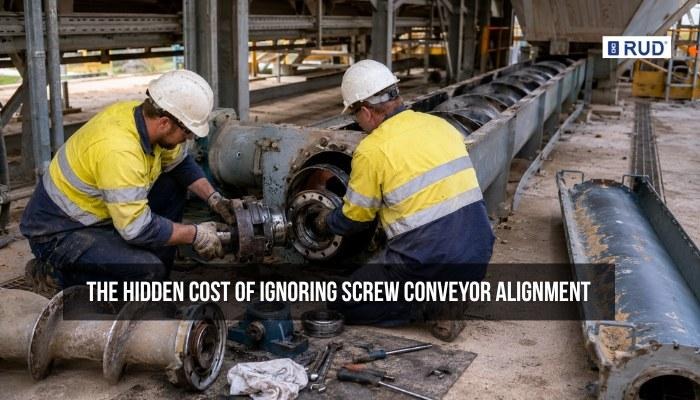
A bearing fails, you replace it, and three months later the same bearing fails again. The blame may fall on the supplier, the load, or the shift team, but repeated failures can point to a deeper problem: misalignment.
Since it doesn’t trigger a fault code, misalignment often goes unnoticed. Instead, it shows up as component failures while the underlying cause goes unaddressed. Over time, the cost adds up through parts, labour and repeated callouts, without anyone connecting them to the same root cause.
It’s a pattern RUD Australia‘s engineering teams see across conveyor installations. This article breaks down what misalignment does inside a screw conveyor and what it costs you in parts, labour and downtime. You’ll also learn how to catch the problem before it drains your maintenance budget.
Let’s dive in.
Why Screw Conveyor Alignment Gets Overlooked
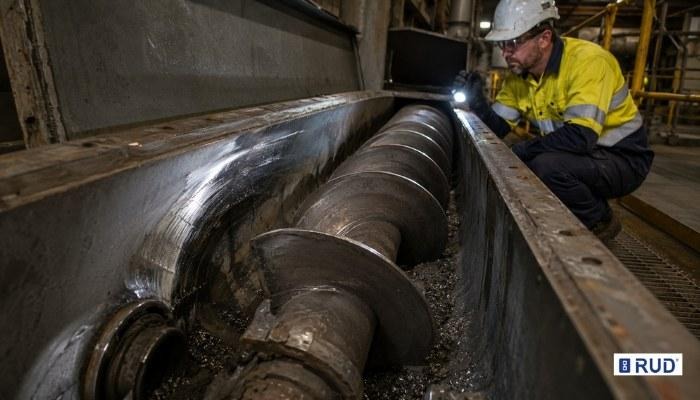
As mentioned, alignment gets missed because nothing in the failure points back to it. A bearing seizes, and you replace the bearing. That’s it. The maintenance log shows a failed component, a replacement part, a job closed out.
Nobody’s recording that the bearing lasted two months instead of twelve because the shaft was misaligned by 3mm. Six weeks later, the next one goes. Different shift, different technician, another log entry that says nothing about why it failed.
The failure pattern reinforces this. Three bearing replacements in a year look like a bearing problem. A recurring seal failure looks like a contamination issue or a poor-quality component. Technicians diagnose and repair each one without comparing it with previous failures, and the same positions keep failing sooner than they should.
The inspection side doesn’t help either. A 2–3 mm deviation won’t show up on a walkthrough. Without vibration monitoring or scheduled alignment checks, it can go through dozens of shift changes undetected.
What Happens Inside the Conveyor When Alignment Is Off
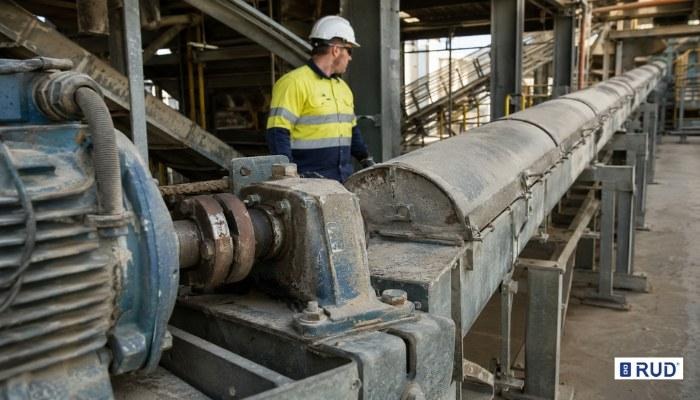
Once a screw conveyor is out of true, the extra load spreads through the components connected to the shaft. That includes the bearings, seals, shafts, flighting, and trough.
The sections below look at how misalignment affects each of these components.
Premature Wear on Bearings, Seals, and Shafts
A misaligned shaft doesn’t spin cleanly through its bearings. It pushes against them at an angle, forcing one side to carry more load than it was built for. That uneven pressure builds with every rotation, the same way bending a wire back and forth eventually snaps it.
Seals wear the same way, just quieter. They lose contact on one side, then let material and moisture through where they shouldn’t. By the time anyone notices, the shaft itself often needs correcting too, not just the part that failed first.
Higher Motor Load from Extra Friction
When a screw conveyor is properly aligned, the screw turns freely inside the trough without creating unnecessary resistance.
However, misalignment creates friction as the screw drags against one side of the trough instead of turning freely. As a result, the motor draws more current to maintain the required output, even though the material being moved hasn’t changed.
Over weeks, that extra draw pushes the gearbox and drive components toward the end of their service life sooner than expected.
Flighting and Trough Damage Over Time
Picture the screw turning inside the trough with its flighting rubbing against the same section of wall on every rotation. The contact might seem minor at first, but thousands of rotations gradually grind away at the metal.
The worn section develops a groove where the flighting keeps striking it. Left unchecked, the rubbing can shed metal shavings into the material being moved. This is especially risky in food, mining and defence applications, where metal particles in the material can create a contamination issue.
Once the groove becomes deep enough, adjusting the alignment won’t fix the damage. The affected trough section needs replacing.
The Downtime and Maintenance Costs of Ignoring It
A repair that should take an hour turns into a half-day job once you’re pulling apart a section that’s been quietly grinding away for months.
That gap between what a fix should cost and what it costs is where the real cost hits hardest. The real cost shows up in downtime, maintenance expenses, and lost production.
More Frequent Breakdowns and Unplanned Downtime
Fixing problems only when they fail can lead to repeated component failures and more downtime. NIST research found that manufacturers with the highest reliance on reactive maintenance had 3.3 times more downtime than those with the lowest reliance.
RUD Australia’s engineering teams see this pattern often. Repeated bearing and seal failures on the same conveyor almost always trace back to an alignment issue that was never fixed.
Higher Labour and Spare Parts Costs
An unplanned bearing replacement can cost around A$1,000–A$2,000 once the bearing, labour and site callout are included. Fixing the same component twice adds another full round of cost, without ever addressing why it failed.
Technicians spend that time diagnosing symptoms instead of preventing them. They check the same bearing or seal without ever tracing the problem back to the shaft. As those failures recur, spare parts run out faster, which pressures procurement and pushes maintenance expenses higher than they need to be.
Production Losses During Extended Repairs
Once a technician starts repairing a misaligned conveyor, production is either halted or delayed.
The longer the equipment stays out of service, the more that impact grows. A short repair might affect one production run, while a larger repair can push work into the next shift or delay an order. The lost output adds another cost to the alignment problem, separate from the parts and labour needed to fix it.
Signs Your Screw Conveyor May Be Misaligned
You don’t need to wait for a bearing to fail before checking for misalignment. A few signs tend to show up well before that point, if you know where to look.
- Unusual Vibration or Noise: A conveyor that starts rattling or humming louder than usual can point to a shaft or other component operating under uneven load.
- Uneven Wear Patterns: Heavier wear on one side of the trough, flighting or hanger bearings can indicate uneven loading. Even wear across the full length suggests the conveyor is properly aligned.
- Product Spillage or Inconsistent Flow: Watch how material moves along the trough. If you see spillage or flow that surges instead of running steadily, the screw may be misaligned and moving material unevenly.
- Motor Running Hotter Than Usual: A noticeable rise in current draw or motor temperature usually means the motor is fighting friction it shouldn’t have to.
Catching any of these early gives you a chance to fix the alignment itself, instead of waiting for the next component to fail.
How to Catch Misalignment Before It Costs You
Waiting for a component to fail isn’t the only way to find an alignment problem. Routine checks and monitoring can reveal issues before they cause component damage.
A laser alignment tool provides a precise way to perform an alignment check. It measures the drive shaft and coupling against the correct specification, so you have a precise baseline to work from. Repeat the check after any major repair or reinstallation, then at intervals that suit the conveyor’s workload.
Keep an eye on vibration, noise, or heat around the bearing positions. If you notice a change from the normal pattern, bring in a qualified technician to check the setup directly. That gives you a chance to plan the repair before it becomes an unplanned shutdown.
Make Alignment Part of Preventive Maintenance
A bearing that fails twice in a year isn’t always bad luck. It can be a sign that the same underlying problem is putting repeated stress on the conveyor.
Making alignment checks part of routine maintenance gives you a chance to find that problem before it leads to another failure. You avoid treating each broken component as a separate incident while the real cause remains.
RUD Australia has spent decades helping Australian sites maintain and troubleshoot conveyor systems. If repeated failures are eating into your maintenance budget, talk to us about finding the underlying cause before the next breakdown.
