

Introduction
For eligible Canadian businesses, the GST/HST Quick Method can simplify how GST/HST remittances are calculated without changing the tax charged to customers. Instead of generally calculating GST/HST collected against eligible input tax credits, the Quick Method uses prescribed remittance rates based on the business and its supplies.
However, eligibility, remittance rates, ITC restrictions, and recordkeeping requirements still need careful attention. Proper GST/HST bookkeeping helps ensure the right revenue is included; applicable rates are used, and required records are maintained. Businesses considering the method can also review the accounting and bookkeeping support available from NCSGX.
Key Takeaways
- The GST/HST Quick Method can simplify GST/HST remittance calculations for eligible Canadian businesses.
- The method changes how much GST/HST is remitted, not the tax charged to customers.
- Eligibility depends on CRA rules, including the $400,000 four-quarter test and specific business exclusions.
- Quick Method remittance rates vary based on the business activity, province, and type of supplies.
- Accurate GST/HST bookkeeping, and records are still required, even when using the Quick Method.
Using the Quick Method of Accounting for GST/HST in Your Bookkeeping
For some Canadian small businesses, calculating GST/HST under the regular method can create unnecessary administrative work. The GST/HST Quick Method offers eligible registrants a simpler way to calculate net tax by using prescribed remittance rates instead of tracking most GST/HST paid on operating expenses. However, eligibility, exclusions, election rules, and provincial rates matter.
The Quick Method does not reduce the GST/HST you charge customers. You continue charging the applicable GST/HST rate. The difference is how much of the tax collected is ultimately remitted to the CRA.
What the GST/HST Quick Method Changes in Your Bookkeeping
The Quick Method of Accounting is an alternative way for eligible GST/HST registrants to calculate net tax. Instead of generally calculating GST/HST collected minus eligible ITCs on operating purchases, the business applies a CRA-prescribed remittance rate to eligible GST/HST-inclusive revenue.
| Area | Regular method | Quick Method |
| GST/HST charged | Applicable GST/HST rate | Applicable GST/HST rate |
| Remittance | Tax collected minus eligible ITCs | Prescribed rate multiplied by eligible revenue |
| Records | Detailed records required | Detailed records still required |
| Main limitation | More administrative work | Most purchase ITCs unavailable |
Good GST/HST bookkeeping remains necessary because sales, purchases, capital assets, adjustments, and supporting records still need to be tracked.
Check Whether Your Business Can Use the Quick Method
The CRA generally allows the Quick Method when worldwide taxable supplies, including those of associates, do not exceed $400,000 under its specific four-quarter test. Certain supplies are excluded from this calculation, and the business must have a permanent establishment in Canada.
New registrants may also qualify if they reasonably expect their worldwide taxable supplies, including those of associates, to stay within the $400,000 limit during their first full year.
However, some businesses are excluded, including those providing bookkeeping, accounting, financial consulting, tax consulting, tax return preparation, legal, or actuarial services, subject to CRA rules. Meeting the revenue threshold alone does not guarantee eligibility. Proper GST/HST bookkeeping can help confirm whether your business qualifies before making an election.
Comparison of the Quick Method with the Regular Method
The Quick Method is not automatically better. A business with substantial GST/HST-bearing purchases may find the regular method more suitable because eligible GST/HST input tax credits can materially reduce net tax.
Under the regular method, net tax generally reflects GST/HST collected minus eligible GST/HST input tax credits. Under the Quick Method, prescribed rates are applied to eligible GST/HST-inclusive revenue, with specific adjustments and permitted ITCs handled separately.
Determine the Correct Quick Method Remittance Rate
There is no single rate for every business. Current Quick Method remittance rates depend on factors such as whether the business primarily purchases goods for resale or provides services, the province connected to its permanent establishment, and where taxable supplies are made. Businesses operating across participating and non-participating provinces may need more than one rate.
For example, CRA’s current table lists different rates for service businesses and businesses purchasing goods for resale. The applicable rate can also change based on whether the supply is subject to 5% GST or HST. The CRA also provides a 1% credit on the first $30,000 of eligible revenue in each fiscal year when the conditions are met.
Always check the current CRA table before applying Quick Method remittance rates.
Set Up Your Bookkeeping for the Quick Method
Effective GST/HST bookkeeping should include:
- Track GST/HST-inclusive revenue used for the Quick Method calculation.
- Keep sales invoices, purchase receipts, and supporting records.
- Record capital purchases separately to identify potentially eligible ITCs.
- Reconcile GST/HST accounts before filing each return.
- Review the applicable remittance rate when your business activity, province, or sales mix changes.
The Quick Method simplifies the calculation, but businesses must still maintain complete books and records to support their supplies and purchases.
For organized GST/HST bookkeeping, bookkeeping support can help maintain accurate records and reconciliations.
Calculate a Quick Method Remittance Step by Step
Example: A hypothetical service business in Ontario has $50,000 of eligible GST/HST-inclusive revenue during a quarterly reporting period. Assume the CRA rate applicable to its circumstances is 8.8%.
The GST/HST Quick Method calculation would be:
- Determine the eligible revenue for the reporting period.
- Include GST/HST in the revenue amount where CRA rules require it.
- Identify the correct rate for the business activity, province, and supplies.
- Multiply $50,000 by 8.8%, producing $4,400 before adjustments.
- Apply any eligible 1% credit, adjustments, or permitted ITCs.
- Include GST/HST on supplies excluded from the Quick Method calculation separately.
- Report the final amount on the GST/HST return and remit any balance owing.
This is an illustrative calculation, not a universal result. The correct GST/HST Quick Method calculation must use the current CRA rate and revenue categories that apply to the actual business.
Elect and File Using the Quick Method
An eligible business can elect through CRA online services or by submitting the GST74 election form. The effective date must generally be the first day of a GST/HST reporting period. Election timing depends on whether the business files annually, monthly, or quarterly.
The GST74 election form is an election document, not the GST/HST return itself. The business must still file its GST/HST return and remit the amount owing the applicable deadline. If your GST/HST setup involves broader compliance considerations, tax support can help you understand your filing and regulatory obligations.
Avoid These Quick Method Bookkeeping Mistakes
Avoid these common errors when using the Quick Method:
- Assuming the business qualifies simply because revenue is below $400,000.
- Ignoring the CRA exclusion for bookkeeping and accounting service providers.
- Using outdated Quick Method remittance rates or applying the wrong rate.
- Applying the rate to the wrong revenue amount or including excluded supplies incorrectly.
- Failing to maintain records and reconcile GST/HST accounts before filing.
Always review your eligibility, applicable rate, and CRA requirements at year-end to keep your GST/HST bookkeeping accurate.
Review the Election at Year-End
The CRA recommends reviewing your Quick Method eligibility at the end of each fiscal year. Check your taxable supplies, associates, business activity, permanent establishment, province, and applicable remittance rate.
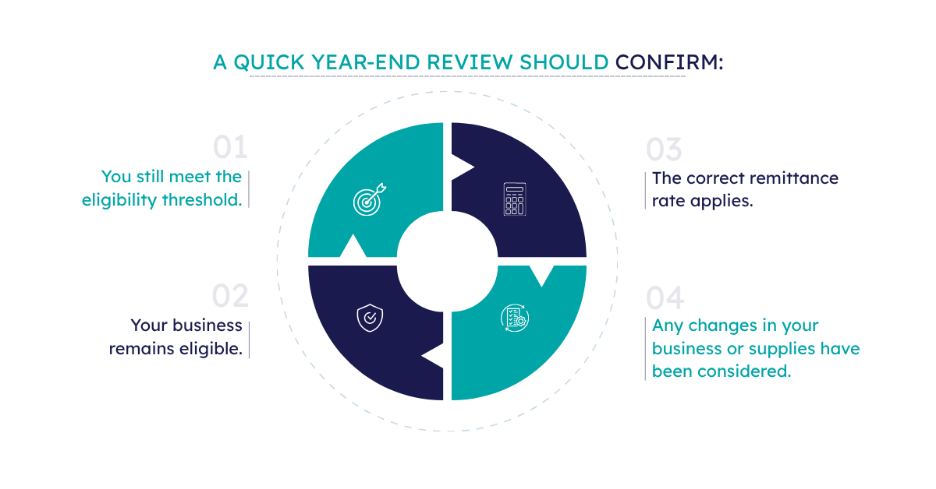
If your business has changed significantly, reassess your eligibility and rate before the next reporting period.
Conclusion
The GST/HST Quick Method can simplify remittance calculations, but eligibility, accurate rates, proper records, and permitted ITCs still matter. A well-organized bookkeeping process helps you stay compliant and avoid costly errors.
Not sure whether the Quick Method fits your business or needs help keeping your GST/HST records accurate? Contact us to discuss your bookkeeping needs and get the right support.
How NCSGX Can Help
The right GST/HST process starts with knowing what applies to your business and keeping the numbers organized from the start. NCSGX can help you review your GST/HST bookkeeping, identify gaps in your records, and keep your sales tax accounts properly reconciled.
Whether you are considering the Quick Method, reviewing your remittance calculations, or preparing for year-end, we can help you maintain a clear and reliable bookkeeping process so you can make informed decisions with confidence.
FAQs
What is the GST/HST Quick Method of Accounting?
The Quick Method is a simplified way for eligible GST/HST registrants to calculate net tax using CRA-prescribed remittance rates instead of generally claiming ITCs on most purchases.
Who is eligible to use the GST/HST Quick Method?
Generally, businesses must meet the CRA’s $400,000 four-quarter threshold, have a permanent establishment in Canada, and meet other eligibility conditions. Certain businesses and supplies are excluded.
Can a bookkeeping business use the GST/HST Quick Method?
No. The CRA specifically excludes businesses providing bookkeeping and accounting services, along with certain consulting, legal, and actuarial services, subject to its rules.
Can I claim tax credits under the Quick Method?
Most purchase-related GST/HST input tax credits are generally unavailable. However, certain ITCs for qualifying capital assets, real property, and other CRA-specified items may still be claimed.
How is the Quick Method remittance calculated?
The GST/HST Quick Method calculation generally applies the CRA-prescribed remittance rate to eligible GST/HST-inclusive revenue, followed by any permitted adjustments, credits, or ITCs.
Does the Quick Method reduce the GST or HST charged to customers?
No. You continue charging the applicable GST/HST rate on taxable supplies. The Quick Method only changes how the amount you remit to the CRA is calculated.
