

Key Takeaways
- Choose a fence based on its primary job, whether that is privacy, pet containment, pool safety, curb appeal, or a clear property boundary.
- Compare wood, vinyl, aluminum, and chain link for maintenance needs, appearance, visibility, strength, and long-term value.
- Verify property lines, easements, local requirements, and utility locations before ordering materials or setting posts.
- Plan gate locations, drainage, slopes, and yard access before finalizing the layout.
A new fence can make a backyard more private, safer, and easier to enjoy, but it is not a project to plan from a product photo alone. Homeowners researching fence installation Cincinnati OH, can review Furlong Fence’s overview of residential installation, material options, and project planning. Furlong Fence is a locally focused residential fencing company serving Greater Cincinnati and Northern Kentucky, with experience in wood, vinyl, aluminum, and chain link solutions designed for local homes and yard conditions.
The strongest results begin with decisions made before construction day. A thoughtful plan helps avoid boundary disputes, misplaced gates, drainage problems, utility damage, and a fence style that does not fit the way your household actually uses the yard.
Why Fence Planning Matters
A fence is more than a line around a property. It may create a private patio area, contain a dog, separate a garden from a play space, support pool safety, or improve the appearance of a front yard. Each goal calls for different choices in height, spacing, gates, and materials. Planning early also makes it easier to coordinate landscaping, outdoor projects, and contractor schedules.
Step One: Define the Main Job of the Fence
Start with the problem the fence needs to solve. A tall, solid privacy fence may be ideal behind a busy home, while an open aluminum fence may better preserve a view around a pool or landscaped front yard.
Questions to Ask First
- Do you need complete privacy, partial screening, or simply a visible boundary?
- Will the fence contain dogs, young children, or both?
- Does the yard include a pool, garden, patio, or play area?
- Should the finished fence blend into the landscape or become a focal point?
- How much cleaning, staining, painting, or repair are you willing to handle each year?
Step Two: Compare Common Residential Fence Materials
Wood Fencing
Wood offers a classic appearance and flexibility in height, picket spacing, stain color, and privacy styles. It works well when homeowners want a natural look or a custom design. However, wood requires periodic inspection and maintenance to address weathering, moisture exposure, rot, and loose fasteners.
Vinyl Fencing
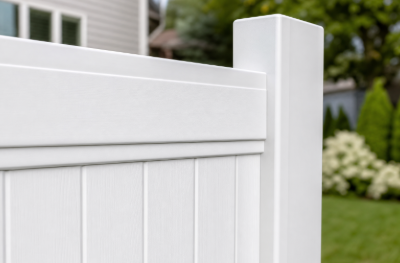
Vinyl can provide a clean, consistent finish without the need for regular staining or painting. It is often considered for privacy areas, family yards, and pool-adjacent spaces. Product quality still matters, so compare panel thickness, reinforcement, color options, gate hardware, and warranty terms rather than choosing based on appearance alone.
Aluminum Fencing
Aluminum fencing creates a defined boundary while keeping sightlines open. It can be a practical choice for pools, gardens, pets, and sloped lots because many systems can follow grade changes. It will not provide full privacy, but it offers a decorative metal look with relatively modest upkeep.
Chain Link Fencing
Chain link is a functional option for pet containment, side yards, and larger spaces where visibility matters. Black vinyl-coated mesh, privacy slats, and windscreens can change the finished look. Proper post placement, mesh tension, and gate design make a significant difference in durability and appearance.
Step Three: Check Cincinnati Rules Before You Build
Requirements can vary by zoning district, historic status, yard location, lot configuration, and fence height. The City of Cincinnati identifies fences as projects that generally require a zoning certificate of compliance or, in historic districts, a certificate of appropriateness before work begins. Review the city’s guidance on residential construction projects and confirm which rules apply to your specific address.
Items to Confirm
- Maximum permitted height in rear, side, front, and corner-side yards.
- Required setbacks and visibility limits near streets, sidewalks, and driveways.
- Historic district review requirements.
- Whether a site plan, property drawing, or other documentation is needed.
- Homeowners’ association rules that may be stricter than municipal requirements.
As a general planning point, Cincinnati guidance distinguishes between rear or interior side yards and more visible front or corner side yards. Confirm the current requirements before purchasing materials, especially if a gate could swing toward a public right-of-way.
Step Four: Confirm Property Lines and Easements
Never assume an old fence, hedge, driveway edge, or neighbor’s landscaping marks the legal boundary. Review your survey, deed, and available county records. If the boundary is unclear, contested, or important to the design, a licensed surveyor can establish the line before construction.
Also check for utility easements, drainage routes, shared drives, and access areas. A fence and its concrete footings should remain entirely on your property. Placing a fence too close to a boundary without clear information can lead to an expensive dispute later.
Step Five: Call Before Digging
Every post hole has the potential to encounter buried utility infrastructure. Before excavation, use the call-before-you-dig process to request utility locating and wait for the required responses and markings. Keep those markings visible during layout and installation, and remember that private lines, such as some landscape lighting, irrigation, or customer-owned service lines, may require separate locating.
Step Six: Plan Layout, Gates, and Yard Access
Walk the proposed fence line before anyone digs. Identify corners, grade changes, trees, roots, drainage paths, and access points for lawn equipment. On a level yard, panels may follow a straightforward line. On a sloped lot, the design may need stepped sections or racked panels that follow the grade.
Gate Planning Questions
- Where will people most often enter the yard?
- Will a mower, wheelbarrow, or trailer need a wider opening?
- Should the gate swing inward or outward without blocking a walkway?
- Does the latch need to be lockable, self-closing, or child-resistant?
- Will pets be able to push through a gap beneath or beside the gate?
Match the Fence to Cincinnati Yard Conditions
Local soil, wet areas, roots, slopes, and freeze-thaw cycles can affect alignment and post stability. A strong installation depends on accurate layout, appropriate post depth and spacing, drainage considerations, and secure gate posts. Even premium panels cannot compensate for a weak foundation or a layout that ignores water movement across the yard.
How to Choose a Fence Installer
Compare written estimates rather than relying only on a price-per-foot figure. Ask whether the proposal includes layout, gates, demolition, and removal of an existing fence, cleanup, material specifications, utility coordination, and permit-related responsibilities. A reliable installer should explain how the plan addresses slopes, access limitations, drainage, property lines, insurance, warranties, and the expected schedule.
Common Homeowner Questions
Does a Fence Always Need Approval in Cincinnati?
Many residential fence projects require a zoning certificate of compliance, while historic districts may require a certificate of appropriateness. Taller fences and special site conditions may involve additional review. Check before work starts.
Which Material Needs the Least Maintenance?
Vinyl and aluminum generally require less routine maintenance than wood, but no material is maintenance-free. Clean surfaces as needed, inspect hardware, check gates after storms, and promptly address shifting soil or damage.
When Should a Homeowner Install a Fence?
Plan well ahead if the fence must be ready for summer gatherings, a new pet, pool use, or a landscaping project. Weather, ground conditions, approvals, material availability, and contractor schedules can all influence timing.
Final Checklist Before Installation Day
- Define the fence’s primary purpose.
- Select a material and style that fits your upkeep expectations.
- Verify property lines and easements.
- Confirm Cincinnati and HOA requirements.
- Request utility locating before digging.
- Mark corners, gates, and access routes.
- Review the written installation plan and final scope.
- Complete a final walkthrough when the project is finished.
