

Key Takeaways
- A successful renovation begins with a complete condition review and a realistic project plan.
- Choose a contractor based on a detailed written scope, relevant experience, licensing, insurance, and communication.
- Plan safety improvements alongside cosmetic upgrades rather than treating them as optional extras.
- Compare finishes, tile, coping, decking, lighting, drainage, and equipment according to use, climate, and maintenance needs.
- Protect the budget by documenting changes and reserving funds for concealed damage or required updates.
A pool renovation can improve curb appeal, comfort, safety, and day-to-day maintenance, but success depends on more than just selecting a new finish. Before requesting estimates, property owners should understand the pool’s condition and define what the project needs to address. Resources such as Poolrenovation.com can help homeowners begin thinking through renovation priorities, but every project should start with an on-site evaluation of the pool and its surrounding systems.
Whether the pool serves a family backyard, an apartment community, a hotel, a school, or a municipal facility, careful planning prevents expensive surprises. A contractor should be able to address visible wear along with the plumbing, drainage, electrical components, circulation equipment, and safety features that affect how the pool performs after the renovation is complete.
Why Pool Renovation Planning Matters
An aging pool may need more than resurfacing. Rough plaster, staining, chipped tile, and worn coping are easy to see, but hidden concerns can include leaks, weak circulation, failing lights, damaged deck drainage, or shell movement. Addressing only the surface may leave the underlying cause untouched, leading to water loss, repeat repairs, or premature finish failure.
Planning is especially important for commercial pools because access, supervision, operating schedules, health requirements, and public safety can affect the work. Establishing a clear scope early helps avoid rushed material choices, unclear change orders, and schedule disruptions after demolition begins.
Start With a Full Pool Condition Review
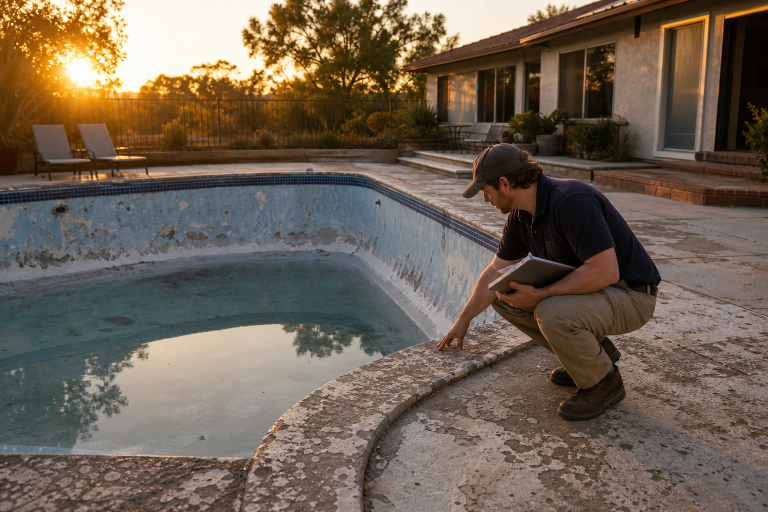
Inspect the pool interior, shell, waterline tile, coping, deck, equipment pad, drains, lighting, and grading around the pool. Take photos, record measurements, review maintenance records, test equipment, and investigate unexplained water loss before deciding which repairs or finishes are needed.
Warning signs that deserve closer attention include recurring cracks, loose or missing tile, flaking or unusually rough surfaces, standing water beside the deck, falling water levels, and uneven steps or walking areas. A contractor who identifies these conditions before work begins is better positioned to recommend an appropriate repair plan.
Set Clear Goals Before Requesting Quotes
Decide whether the main objective is structural repair, improved appearance, safer access, easier maintenance, water conservation, or a complete redesign. Then rank the work in order of importance:
- Safety and structural concerns.
- Leaks, circulation problems, and drainage issues.
- Damaged interior surfaces, tile, coping, and deck areas.
- Accessibility, comfort, lighting, and entry improvements.
- Decorative upgrades and optional features.
Separating required work from optional features makes it easier to manage the budget without postponing repairs that affect safety or durability.
What to Look for in a Pool Contractor
Verify that the contractor has the required licenses and insurance, local references, and experience with pools similar to yours. Ask who will inspect the site, which tasks will be completed by employees or subcontractors, how surfaces will be prepared, and how the weather could affect the schedule.
Strong contractors can explain their preparation methods, materials, repair limits, warranty terms, and maintenance expectations in plain language. They should also describe how hidden damage will be photographed, priced, approved, and documented. Clear answers often reveal more about a company than a polished sales presentation.
Compare Written Proposals Carefully
Each proposal should identify labor, materials, demolition, surface preparation, repairs, equipment work, cleanup, disposal, permits, and anticipated scheduling. Compare the exact finish type, tile and coping allowances, payment schedule, expected start and completion windows, warranty exclusions, and change-order procedures.
Be cautious with vague phrases such as “standard materials” or “repair as needed.” The lowest estimate may omit preparation, drainage corrections, equipment updates, or quality materials that reduce future repair costs. A complete scope is more valuable than a low number that changes after work starts.
Choose Materials Based on Use and Climate
Material decisions should reflect freeze-thaw exposure, direct sun, pool chemicals, water temperature, foot traffic, indoor humidity, and cleaning routines. A finish that performs well in a lightly used backyard pool may not be the right choice for a busy hotel, school, or community facility.
Ask each contractor about expected service life, cleaning requirements, startup procedures, texture, chemical tolerance, and repair options. Include the deck and coping in those conversations, since walking surfaces must balance appearance, drainage, comfort, and slip resistance.
Build Safety Into the Renovation
Use the renovation to review handrails, depth markers, drain covers, barriers, self-closing gates, alarms, safe entry points, and lighting. For public facilities, local requirements should guide the planning process, while the CDC’s current Model Aquatic Health Code can serve as a useful reference for safer design and operation. The latest posted edition is the 2024 fifth edition.
- Can swimmers enter and exit without awkward footing?
- Are deck surfaces stable, well-drained, and slip-resistant?
- Can supervisors clearly see the pool from common observation areas?
- Are the lights sufficient for safe evening use?
- Are barriers, gates, and alarms functioning as intended?
Plan for Water Quality and Easier Maintenance
A new surface cannot compensate for weak filtration, poor circulation, unstable chemistry, or aging equipment. Review pumps, filters, heaters, chlorination systems, return lines, and controls while the pool is already undergoing work. CDC guidance on keeping a pool safe and healthy also reinforces the importance of proper disinfection, chemical handling, supervision, and regular testing.
Set a Realistic Timeline and Budget
Most projects move through inspection and design, permitting, site preparation, removal of damaged materials, repairs, installation, filling, startup, testing, and final inspection. Weather, inspections, material availability, hidden damage, and project size can extend the schedule, so ask for an expected timeline and a list of likely delays.
Keep a reserve for concealed damage, leak repairs, electrical work, drainage corrections, and required code updates. Approve every added cost in writing before the work begins, and prioritize safety, structural repairs, circulation, durable walking surfaces, accessibility, and lighting before decorative extras.
Prepare for the Final Walkthrough
Before final payment, inspect surface texture and color, tile and coping alignment, deck drainage, steps, handrails, lights, drains, returns, fittings, and equipment operation. Request maintenance instructions, warranty documents, product information, and written records of approved changes. The first weeks after filling are particularly important because correct water balance and finish care can influence long-term appearance and performance.
Common Questions
How do you know if a pool needs renovation?
Repeated repairs, rough or flaking surfaces, leaks, outdated safety features, loose tile, damaged decking, and unreliable equipment are common signs that a more complete renovation plan may be worthwhile.
Should equipment be replaced during a pool renovation?
It depends on the equipment’s age, efficiency, repair history, condition, and ability to support the renovated pool. Replacing failing components during construction can be more practical than reopening finished areas later.
How long does pool renovation take?
Simple cosmetic work may move quickly, while structural repairs, permits, equipment upgrades, multiple finishes, and commercial access requirements can add significant time.
Is a pool renovation worth the cost?
Value comes from safer use, fewer repairs, improved maintenance, better water management, enhanced appearance, and a pool that better serves its users.
Conclusion
A well-planned pool renovation improves far more than appearance. By inspecting the entire pool, setting priorities, comparing detailed proposals, choosing materials for local conditions, and building safety into every phase, property owners can create a more durable, usable, and manageable pool for 2026 and beyond.
