

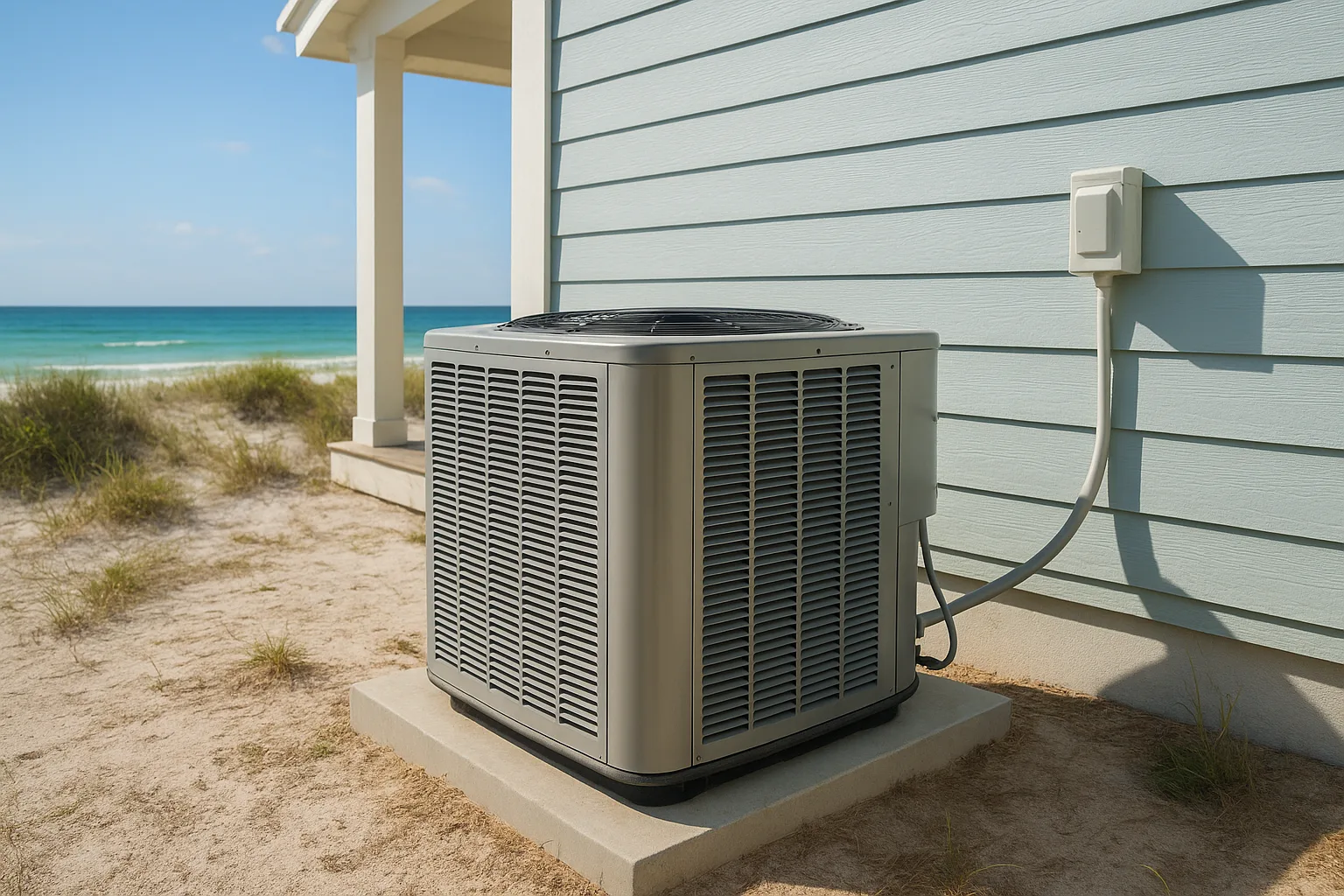
On a sticky Panama City afternoon, an overworked air conditioner doesn’t fail all at once. It usually starts with a whisper: the air from supply vents feels a few degrees warmer, the indoor unit runs longer than it used to, or a musty odor lingers near the return grille. You might spot water around the air handler, hear a condenser fan hesitate at startup, or notice the thermostat setpoint barely moving the needle. Because Gulf humidity and salt air magnify small problems, reading these signals early can save a compressor, a ceiling, and a weekend. Here’s how to interpret common symptoms, what you can safely check, when to stop DIY, and how to prevent repeat issues in our coastal climate.
- Early warning signs specific to humid, coastal homes
Water where it doesn’t belong is often the first clue. An overflowing condensate pan or a tripped float switch may mean the drain line is slimed with algae, common in warm, damp closets and attics. Ice on the larger copper suction line or the evaporator coil points to low airflow or a refrigerant issue, both of which worsen in high humidity. If supply vents blow weakly despite a clean filter, listen for the outdoor unit: a humming compressor with a still fan suggests a bad capacitor; a silent condenser while the thermostat calls for cooling suggests a contactor or power problem. Smells matter too: a musty odor signals standing water or a dirty coil, while a sharp electrical smell calls for immediate shutdown and professional help, such as AC repair in Panama City.
- What those symptoms usually mean inside the system
Frosted copper or a glassy, iced evaporator coil typically traces back to airflow. A clogged return filter, closed supply registers, or a matted indoor coil reduces air volume over the fins. Less warm air means the refrigerant can overcool the coil surface below freezing, and humidity condenses and turns to ice. Low refrigerant charge can cause the same freeze-up by dropping coil pressure and temperature, but topping off without leak detection is a short-lived fix. In both cases, running the unit while iced starves the compressor of refrigerant vapor and oil return, risking expensive damage.
Short cycling, warm air under load, or long run times can stem from outdoor side issues. On beachside streets, salt spray corrosion on condenser fins reduces heat rejection, while grass clippings and palm fronds pressed against the coil starve it of airflow. Electrical wear is common, too: weak capacitors delay motor starts, and pitted contactors interrupt power to the compressor. In older roofs and crawlspaces, duct leaks pull hot, humid attic air into returns, tanking sensible cooling and spiking indoor relative humidity even when supply temperatures look normal.
- Safe checks you can do in minutes.
Start with airflow. Replace the return filter with the correct size and a moderate MERV rating, often 8 to 11, so you capture dust without choking static pressure. Open all supply registers and confirm return grilles aren’t blocked by furniture. Outside, shut off power at the disconnect and gently hose the condenser coil from inside out to remove sand and lint, then clear two feet of space around the cabinet. At the air handler, look for water in the condensate pan; if the drain is accessible, a wet or dry vacuum on the exterior cleanout or a cup of distilled vinegar can help clear a slimy trap. Set the thermostat fan to Auto rather than On so the coil can wring out humidity between cycles. If you see ice on the suction line, switch cooling off and leave the blower running to thaw before further checks.
- When to stop troubleshooting to prevent damage
There are red lines. Repeated breaker trips, a burning smell at the air handler, a hissing line set, or an outdoor fan that won’t spin while the compressor hums are signs to shut it down immediately. Continuing to run an iced coil can flood a ceiling when the pan overflows, and a stalled condenser fan can overheat a compressor in minutes. If the float switch keeps cutting power, don’t bypass it; it is guarding against water damage. After a strong thunderstorm, if the system won’t restart or only clicks at the contactor, leave power off and call a licensed technician to check capacitors, surge damage, and safe refrigerant pressures.
Prevention tuned to Panama City’s salty, humid air.
Humidity control is a balancing act. Higher MERV filters capture fine dust but can restrict airflow if the return is undersized, so pair filter upgrades with a static pressure check. Leaving the fan on can smooth room temperatures, but it re-evaporates moisture off the coil and makes the house feel sticky; Auto usually dehumidifies better. In a bayfront rental where guests prop doors open, expect longer runtimes and consider a smart thermostat with humidistat control to avoid freeze-ups. During our frequent thunderstorms, a whole-system surge protector helps protect control boards and capacitors. Rinse the outdoor coil monthly during peak season, and if your condenser sits low, raise it on a new pad to keep stormwater at bay. A spring tune-up that inspects the evaporator coil, tests the capacitor and contactor, measures refrigerant superheat and subcooling, and flushes the condensate drain is cheap insurance against midsummer failures.
Small AC symptoms rarely fix themselves, especially with Panama City’s humidity and salt air nudging every weakness. By recognizing early signs, handling safe checks like filters, drains, and condenser cleaning, and knowing when to shut the system down, you protect both comfort and equipment. If problems persist or involve electrical, refrigerant, or recurring water issues, bring in a licensed HVAC professional who can test the system under load, fix the root cause, and set you up with maintenance that matches our coastal conditions. A bit of attention now is far easier than an emergency in August.
