

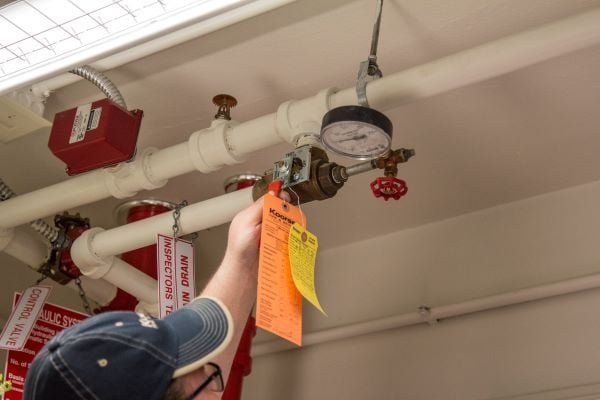
Most sprinkler repair jobs are dull and routine. A mechanic will swap out a valve, test the pipe, sign off on a document, and everyone moves along. But the real problem arises when all of the surrounding steps are not taken. And that is precisely what inspections and insurance will focus on first.
Logistics facilities are particularly vulnerable at this moment in time. Insurance companies are getting stricter, turnover is higher than ever before leaving less people who can recall the last shutdown, and machinery moves faster than the paperwork. When sprinkler systems become nonoperational in such a facility, the code requires an individual take over for the sprinkler system and a documented fulfillment center fire watch is the standard way to meet that expectation. Here are seven mistakes that keep showing up, and what to do instead.
1. Telling Nobody Until the Water’s Already Off
It sounds obvious, yet it happens constantly. A contractor shows up, closes the riser, and only then does anyone think about calling the alarm company. Cue a flood of trouble signals and a confused dispatcher.
The fix is dull but effective: a short notification list posted near the riser room. Fire department, alarm monitoring, insurer, site safety lead. Call before the valve moves, and write down the time.
2. Treating “A Few Hours” as “No Big Deal”
Short outages feel harmless. They aren’t. A fire doesn’t check the repair schedule, and pallets of cardboard burn just as fast on a Wednesday morning as on a holiday weekend. Many jurisdictions set a threshold, often around four hours, beyond which extra measures kick in. Some want action sooner. Nobody should guess, so confirm the local rule with the fire marshal’s office before work starts, and keep the answer on file.
3. Handing the Job to Whoever’s Free
Taking the forklift driver off the ground for walking the aisles is economical. It results in two issues, however. One, the driver’s actual responsibilities will be compromised, and two, the walk-through will become an add-on to his/her daily routine. Furthermore, an inexperienced person would not recognize an expanding battery and sound the alarm.
Professional fire watchers assigned to perform such checks, however, do not face either of these issues.
4. Forgetting the Hidden Spaces
Patrol routes usually run along visible parts of the warehouse: main aisles, dock doors, break rooms. Fires, however, are likely to start in hidden places. Picture an area above a mezzanine, back part of a mechanical room, a space behind a compactor, a place where excess pallets are collected.
On any fulfilment center fire watch, a patrol route is sketched on a warehouse map and walked in daytime before the shift.
5. Letting Hot Work Sneak In
Here’s where many sites lose the argument. A patrol that took place but wasn’t. The danger is that contractors often come up with other things that need to be done on the fly when the pipes are opened. Without a hot work permit and a separate spotter assigned, a small repair job becomes a big risk. The policy is straightforward: no sparking activity within or around the affected area without an approved permit.
6. Sloppy Paperwork
This is often how sites lose the debate. It doesn’t matter if the inspection was conducted but it was not documented – from the adjuster’s point of view, nothing was done. The log needs to document the beginning and ending times, the names of the people, rounds completed, and what was reported.
Handwritten is acceptable. Illegible isn’t.
7. Ending Coverage Too Early
Once the repair looks finished, there’s a temptation to wave everyone off. However, the system will require refilling, flushing, and testing, and flow switches must ensure the alarms have sounded. It would be cutting the coverage before getting the final green light from anyone, and that means there will be an unanticipated time lag.
The patrols will need to continue until the party in charge gives his/her word of approval.
A Quick Reality Check
Run through these questions after any impairment:
- Did the right people hear about it before work began?
- Did trained personnel cover every impaired area?
- Were the logs complete and legible?
- Did coverage continue until final testing?
- Was anything learned that could shorten the next one?
If the honest answer to any of them is “not really,” that’s the item to fix first.
Why Bother?
Citations and denied claims are the visible costs. The outbreak of fire at the regional distribution center could take weeks to restore order, and the customer would not wait around. It is better to invest time in preparation than having to give excuses in the end.
Those teams which handle any impairment effectively have something common between them; they prepare well. They make sure that the valve map is up to date, they save all contacts in an accessible place and plan everything beforehand. On the day of the event, a successful patrol seems almost non-eventful – as it should be.
