

Growth has a way of arriving before the money does. Orders climb, a second location starts to look realistic, a key hire becomes urgent, and suddenly the cash sitting in the account is not enough to carry any of it. Most owners reach this point sooner than they expect, and the ones who handle it well are usually the ones who thought about outside funding long before they actually needed it. Borrowing is not a sign that something has gone wrong. It is a normal part of scaling, and treating it that way removes a lot of the pressure from the decision.
The trouble is that funding decisions are often made in a hurry, under stress, with whatever option happens to be in front of the owner at that moment. That is how businesses end up locked into arrangements that quietly drain them for years. A little preparation changes the outcome considerably.
Knowing What Borrowing Actually Costs You
Every dollar a business borrows arrives with a price attached, and that price is easy to underestimate when you are focused on the amount landing in the account rather than the amount leaving it every month. Owners who only look at the payment figure often miss how much the total repayment stretches beyond what they originally took on. Interest rates on business loans vary enormously depending on the lender, the product, and the strength of the business behind the application, and a few percentage points across a multi-year term adds up to real money that could have stayed in the company. The clearest way to avoid that outcome is to study the interest rates on business loans currently offered across different firms before you apply anywhere. Comparing the annual percentage rate rather than the headline figure is what makes those options genuinely comparable.
Getting Your Financial House in Order First
Lenders form an opinion about a business long before anyone speaks to them. That opinion comes from documents, and the quality of those documents is entirely within your control. Clean, current, professionally maintained books signal that the owner knows what is happening inside the company. Messy records signal the opposite, regardless of how well the business is actually performing.
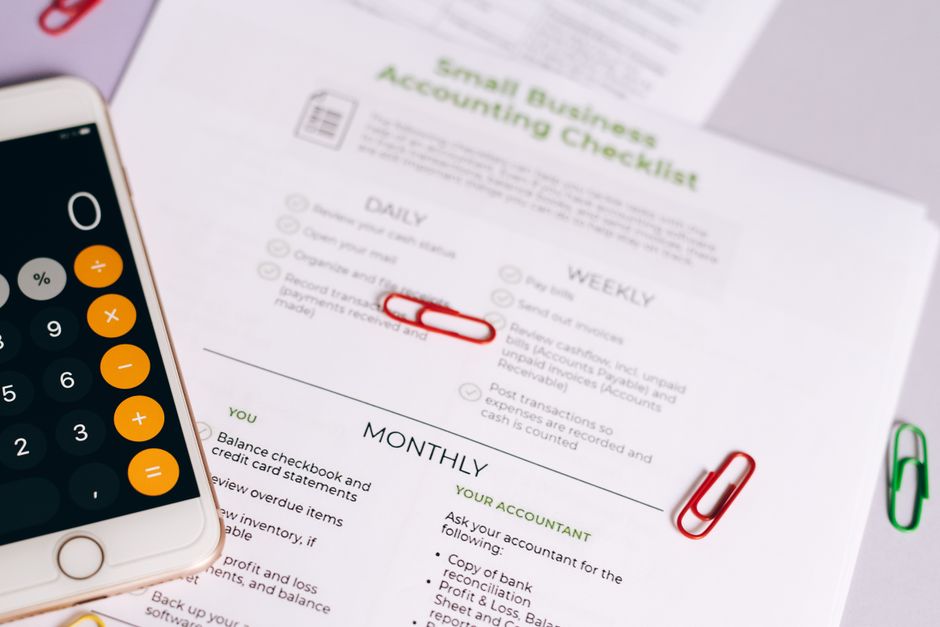
Start with bookkeeping. If reconciliation is months behind, catch it up before you do anything else. Separate business and personal accounts completely if they are still tangled together, because mixed finances make it almost impossible for anyone outside the company to read the numbers accurately. Prepare a profit and loss statement, a balance sheet, and a cash flow statement covering at least the past two years where possible.
Beyond the paperwork, understand your own numbers well enough to discuss them without notes. You should be able to explain a dip in revenue, a spike in expenses, or a slow quarter without hesitating. Owners who can do that come across as capable operators. Owners who cannot come across as passengers in their own business.
Matching the Funding Type to the Need
Not every shortfall calls for the same solution, and this is where a lot of money gets wasted. A business covering a seasonal gap has a completely different requirement from one buying a delivery vehicle or opening a second site.
Short-term gaps between invoicing and payment usually call for flexible, revolving arrangements you draw on and repay repeatedly. Fixed asset purchases suit longer-term arrangements tied to the useful life of the thing being bought, so you are not still repaying something you retired years ago. Expansion projects sit somewhere in between and often need a structure with a slower repayment schedule, since the returns take time to materialize.
Ask yourself a plain question before choosing anything: what exactly is this money for, and when will it start generating a return? If you cannot answer clearly, you are not ready to borrow yet. Vague funding tends to disappear into general operations without producing anything measurable.
Building Credibility With Lenders Over Time
Relationships matter more in business finance than most owners assume. A lender who has watched your accounts for three years has far more context than one meeting you cold, and context reduces perceived risk.
Open a business account early and use it properly. Take on small, manageable credit and repay it exactly on schedule, since a track record of reliability is built through small commitments handled well rather than large ones handled anxiously. Keep your business credit profile monitored the same way you would watch a personal one, and dispute inaccuracies as soon as you spot them because errors on these files are more common than people realize.
Time in operation carries weight too. Many lenders look for two years of trading history before they will consider an application seriously, and that threshold is not arbitrary. Surviving the early period demonstrates something no projection ever can.
Preparing the Application Itself
The application is a sales document, though it rarely gets treated like one. It should tell a coherent story about where the business has been, where it is going, and what specific role the funding plays in getting there.
Include a clear summary of the business, what it does, and who it serves. Provide the financial statements you prepared earlier, along with tax filings and bank statements covering the requested period. Add a realistic forecast showing how repayment fits within your projected cash flow, and keep the assumptions behind that forecast conservative. Optimistic projections invite skepticism and slow everything down.
Be upfront about weaknesses rather than hoping nobody notices. If there was a difficult trading period, explain what happened and what changed afterwards. Underwriters find problems eventually, and the ones disclosed voluntarily look far less alarming than the ones discovered.
Protecting the Business Once the Money Arrives
Securing funding feels like the finish line, but it is the starting point of a new obligation that will shape decisions for years. Build the repayment into your operating budget as a fixed, non-negotiable cost, exactly as you would treat rent or payroll. Owners who treat repayments as flexible are the ones who end up struggling.
Keep a cash buffer separate from the borrowed funds so that a slow month does not immediately threaten your ability to meet commitments. Spend the money on what you said you would spend it on, because deviation is how businesses end up with debt and nothing to show for it. Review performance against the plan quarterly, and be honest when something is not working.
Funding done well accelerates a business that was already heading somewhere. Funding done carelessly simply arrives faster at whatever destination the business was already bound for. The preparation is what determines which one you get.
